

Author: Yihui Intelligence
Release Time: 2025-12-31
Page Views: 166
1. The three are not at the same level
Indoor unmanned transportation
It is more like a general term for the application layer and system layer, referring to the automatic handling of materials, goods, and tooling in indoor environments through unmanned equipment and systems.
It is not a single device, but a complete set of solutions.
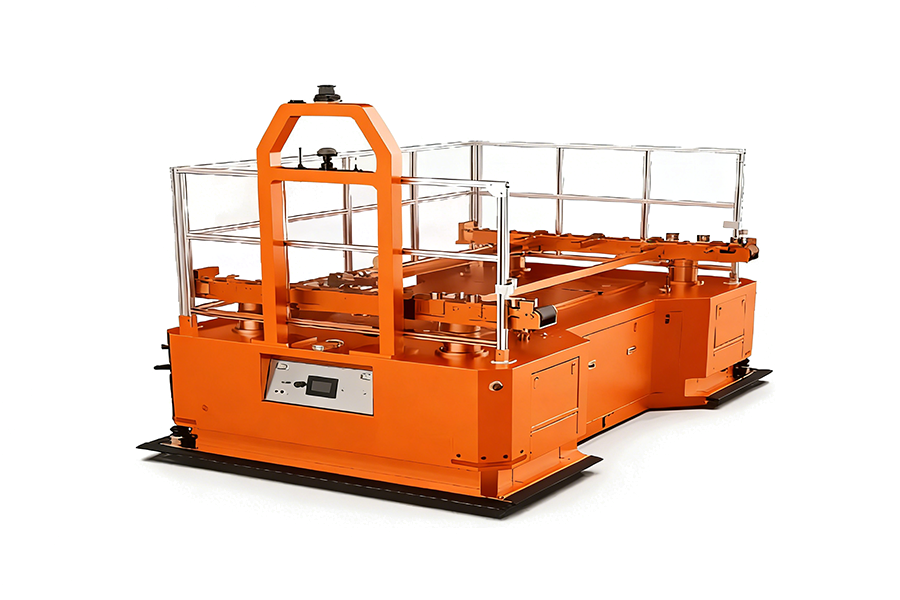
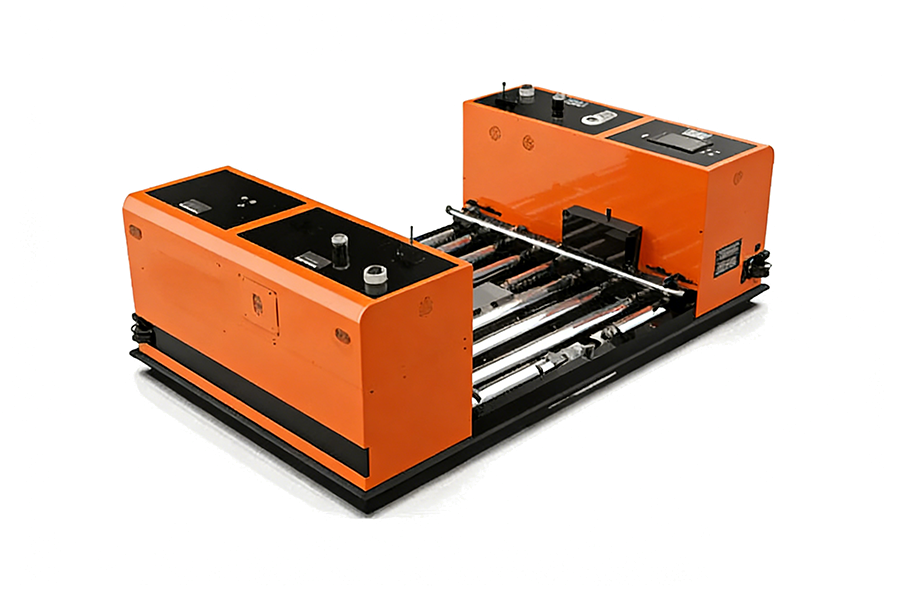
AGV (Automated Guided Vehicle)
It is a specific equipment form for achieving indoor unmanned transportation, relying on "predetermined paths" for operation.
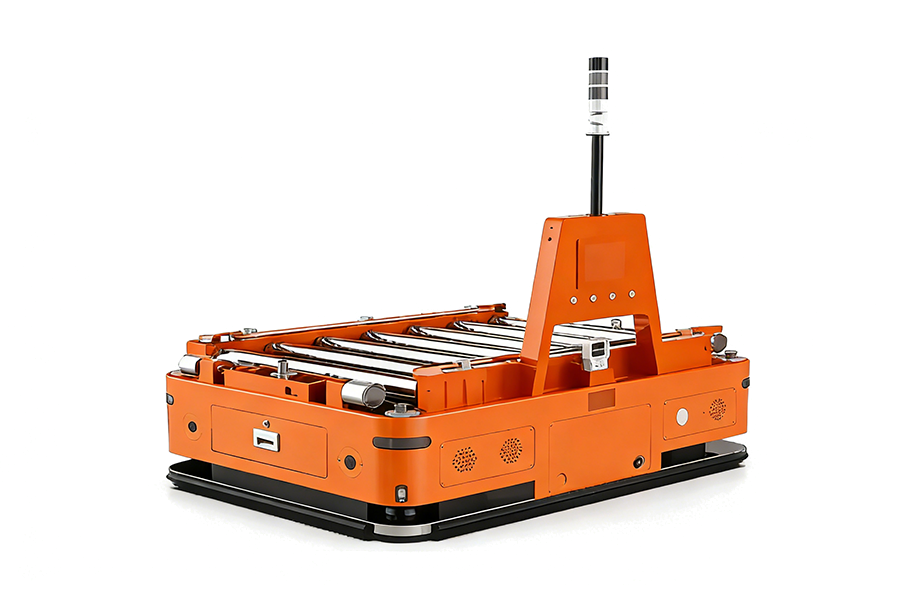
AMR (Autonomous Mobile Robot)
It is also a transport equipment, but it possesses stronger environmental perception and autonomous decision-making capabilities, and its operation mode is more flexible.
Simple understanding:
Indoor unmanned handling = target and system
AGV / AMR = different technical routes to achieve this goal
II. Differences in Navigation Methods: Core Watershed
1. AGV: Follow the "prescribed route"
AGVs typically rely on one of the following methods for navigation:
Magnetic strip, magnetic pin
Ground QR code
Track or reflective strip
Laser reflector (laser navigation AGV)
The characteristics are:
Plan the route in advance
The driving path is relatively fixed
"More like an 'autonomous vehicle'"
Advantages
"Technology is mature"
High stability
Behavior is predictable
Limitations
Once the route is changed, the cost of reconstruction will be high
It has a significant dependence on the on-site environment
2. AMR: "Learning the way" and "avoiding the way" by itself
AMR typically adopts:
Laser SLAM
Visual SLAM
Multi-sensor fusion (laser + camera + IMU)
It does not rely on a fixed path, but rather:
Build a map through perceiving the environment
Real-time determination of the optimal route
"Encountering obstacles, one can take the initiative to bypass them."
Advantages
Flexible deployment
Adapt to dynamic environment
"Relocation does not require construction."
Limitation
The system has higher complexity
High requirements for algorithms and computing power
There are certain requirements for environmental stability
III. Different adaptability to environmental changes
ScreenShot_2025-12-31_174759_335.png
IV. System level: Indoor unmanned handling focuses on "overall efficiency"
A true indoor unmanned handling system usually also includes:
Scheduling system (task allocation, path planning)
Interface integration with WMS / MES / ERP
Multi-vehicle coordination and traffic management
Charging, standby, and exception handling strategies
At this level:
AGV is more like an "execution terminal"
AMR is more like a "smart node"
But no matter which one is chosen, the core is not the vehicle, but whether the system matches the on-site process.
V. Differences in Typical Application Scenarios
AGV is more commonly seen in:
Automobile manufacturing production line
Battery and electronic assembly line
Fixed route transportation from production line to production line
Heavy-load and pallet handling
AMR is more common in:
Warehouse picking
Hospital material distribution
Multiple SKUs and multiple locations for handling
Human-machine collaboration scenario
6. When selecting, don't just ask "Should I use AGV or AMR?"
The more important question is actually:
Is the route on site fixed?
Is it necessary to frequently adjust the workstation?
Are personnel and equipment moving together?
Is there a need for a quick launch with minimal modification?
Has future expansion been considered?
In many projects, AGV and AMR can coexist within the same indoor unmanned handling system, each performing its own specific function.






 Online Consultation
 Follow Us
 198-4957-6657
 19849576657@163.com
 Online Message