

Author: Yihui Intelligence
Release Time: 2025-12-31
Page Views: 103
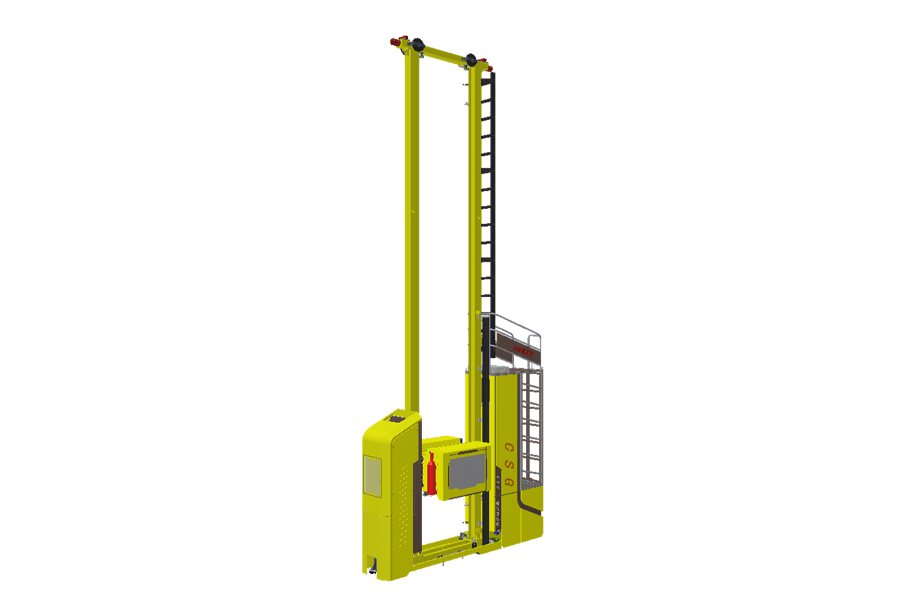
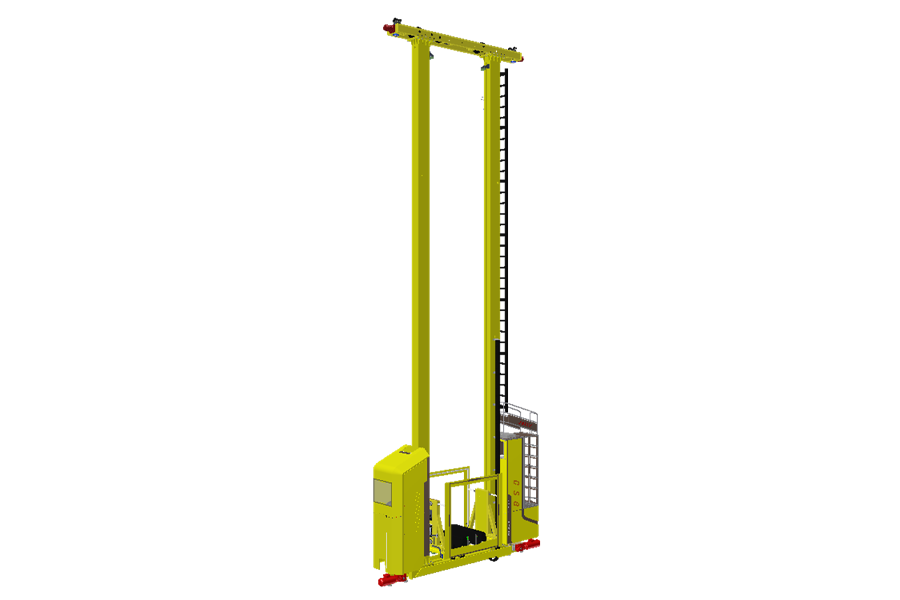
Stacker cranes are not suitable for all types of warehouses; they are more suitable for warehousing scenarios with "clear rules, stable scale, and storage efficiency as the core objective.".
Treating the stacker crane as a "one-size-fits-all device" is often the root cause of unsatisfactory project outcomes. The following explanation is provided from three perspectives: scenarios that are suitable, not suitable, and easily misjudged.
1. Which warehouses are "ideal" for stacker cranes?
1. Large inventory volume and relatively stable turnover
For example:
Raw material warehouse
Semi-finished product warehouse
Finished product buffer silo
The common characteristics of this type of warehouse are:
The goods have been in stock for a relatively long time
The rules for inbound and outbound inventory are clear
Strong planning ability
The continuous operation and high-level storage advantages of the stacker crane can be fully utilized.
2. High standardization of pallets or carriers
The tray size is uniform
Stable load range
The goods have a regular shape
The higher the degree of standardization:
The more precise the alignment
The lower the failure rate
The simpler the system scheduling is
This is precisely the operating environment where stacker cranes excel.
3. Extremely high requirements for space utilization
High land cost
The warehouse has limited land area
"Hope to gain more space"
In this case, the combination of stacker cranes and three-dimensional racks is often one of the most cost-effective solutions.
II. Which warehouses are "not suitable" for directly installing stacker cranes?
1. There are a vast number of SKUs, and inventory in and out are very frequent
For example:
E-commerce front warehouse
Fast-moving inventory with high peak fluctuations
The characteristics are:
High frequency of selection
"There are many single-item deliveries."
Strong randomness
This scene is more suitable for:
Manual + picking system
Shuttle car, material box robot
Instead of stacker cranes, which primarily rely on pallet storage and retrieval.
2. Rapid business changes and high uncertainty
Frequently adjust storage strategies
The purpose of the warehouse frequently changes
The product life cycle is short
The stacker system relies heavily on rules, and frequent changes will incur debugging and modification costs.
3. The old warehouse structure is limited
Insufficient clear height
The ground has limited bearing capacity
Irregular column grid
Under such conditions, even if it can be "barely installed", the effect and safety are hardly ideal.
III. Several situations that are most prone to misjudgment
"If you want automation, choose a stacker crane."
Automation does not equate to three-dimensionalization.
If the core issue is:
Picking efficiency
Sorting cycle time
Human-machine collaboration
The stacker is not the preferred solution.
"If throughput is high, a stacker is a must."
If the throughput comes from:
Multi-point concurrency
"Peak concentration"
Small batch and multiple frequency
Instead, multi-channel, distributed equipment may be needed, rather than single-aisle stackers.
"Get it right the first time, no need to change in the future"
The lifespan of a warehousing system is quite long, yet business changes are more rapid.
The more rigid the structure, the more necessary it is to assess the business trends for the next 5-10 years in advance.
4. How to determine whether your warehouse is suitable?
You can conduct a self-check using a few simple questions:
Is it mainly based on pallet storage or picking?
Is the SKU relatively stable?
Is the warehouse more in need of "space" or "speed"?
Will there be frequent adjustments to the business in the coming years?
If the answer is biased:
Tray
Stability
"Lack of space"
That stacker is often a solution worth seriously considering.
V. Summary
The stacker is a "specialized master", not a "general-purpose player"
Suitable for warehouses with clear rules and stable scale
Choosing the wrong scene can be more fatal than the equipment itself






 Online Consultation
 Follow Us
 198-4957-6657
 19849576657@163.com
 Online Message